

The Labour and Leisure of Heritage: Time and Transformative Action in the Making of Newar Festivals in London
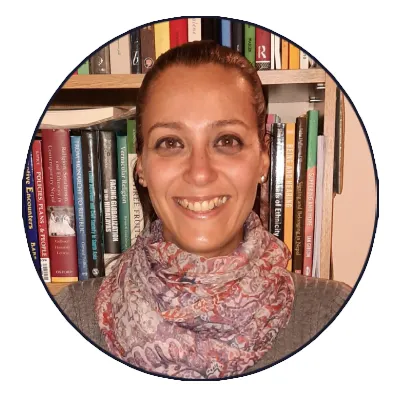
Speaker: Marilena Frisone
(University College Cork)
Warning against the risks of the “heritagization” process (Harrison 2012) as a reification
of cultural practices (Kirshenblatt-Gimblett 2004), the anthropology of heritage has more
recently reconceptualised heritage as “a spatio-temporal practice that discursively and
materially connects the present with specific narratives of the past and establishing a
charter for the future” (Salemink 2021). Heritage-making thus inevitably involves a
complex relation with the past, a process of “reworking of temporality” which also
characterises the cultural practices of diasporic communities navigating multiple times,
including the temporalities experienced in the place where they have settled and those
of the place that they have left (Eisenlohr 2020). But how are these different temporalities
lived and embodied by those diasporic communities while engaging in the process of
heritage-making?
I will explore this question through an ethnography of Newars in London, who reflexively
discuss heritage and the “memory-heritage-identity complex” (MacDonald 2013) in
community seminars and meetings, strategically choosing aspects of their traditional
culture that they intend to “reterritorialize” (Deleuze and Guattari 1987) in a meaningful
way in the diaspora. They organise community gatherings and festival celebrations (like
tah newah muna, guthi bhwoye, mha puja and nhu dan, biska jatra, holi, etc.) that involve
the preparation and consumption of traditional food (yomari, samay baji, kwati, etc.), the
performance of Newar dances (lakhe, kumari, etc.) music (dhime), and the participation
in Newar traditional games (like kasi-mana-paye). Participation in all these activities
implies that they have to make time to make heritage as they engage in heritage practices,
within what is framed in the UK as “leisure” time in opposition to the time of “labour”
(Rojek 2010).
In contrast to this ideology that opposes leisure to labour, Newars use their weekends
and take holidays and time-off from their daily jobs, to engage in community activities
that take a lot of effort, and often entail long hours of planning, musical training and
rehearsing, cooking, the search for construction materials, the crafting of palanquins and
chariots vigorously pulled during festivals. While working together to organise those
events, they experience both long hours of work and the difficult negotiation of duties, but also the pleasure of spending time together, in a way that blurs the ideological
boundary between labour and leisure.
In this paper, based on ethnographic fieldwork among the Newar community in London
since 2015, I aim to demonstrate that heritage-making in the diaspora not only connects
the present with the narrative of a traditional past, but also articulates various internal
temporalities, socially experienced by navigating the labour and leisure of heritage. We
will see how, juggling between the calendrical time of festivals, the institutionalised
leisure and labour division of time in the UK, and the embodied experience of time spent
“crafting” their heritage and its intangible and material culture, they engage in
“transformative work” (Sanchez 2020) that brings them satisfaction, notwithstanding the
strain that heritage making entails.

Leave a Reply
You must be logged in to post a comment.