

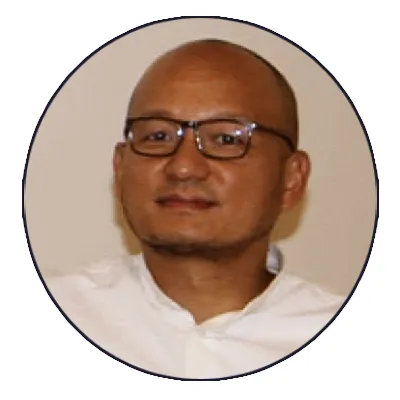
Speaker: Sabin Ninglekhu
Social Science Baha
In the wake of the 2015 earthquakes, Sudarshan Raj Tiwari, the architect-historian of Newah culture and heritage, announced in a public event that the earthquakes not only destroyed Newah buildings and monuments, but the very idea of ‘Newah urbanism’ itself – the Newah everyday life, as articulated and lived through the inextricably interlinked interplay of spaces, identities, and subjectivities, on the ‘theatre’ that is the Newah town (Levy, 1990). Focusing primarily on non-monumental heritage, the private house, I bring this idea of ‘Newah Heritage’ to bear on the post-earthquake rebuilding of four different Newah settlements in the Kathmandu Valley – Bungamati, Harisiddhi, Thecho and Pilachhen. By mobilizing ‘power’ and ‘capital’ – cultural, political and financial – as theoretical and discursive frames, I show the internal contradictions inherent in the rebuilding of these places; contractions that revealed how these different settlements, with similar and comparable cultural and architectural histories, ‘inherently’ carried unequal ‘capital’, as custodians of culture and heritage, and as such, had differential access to ‘power’ – for example, to convert cultural capital into political as well as financial capital – , leading to an uneven geography of heritage rebuilding in the Kathmandu Valley. In addition, I take these ideas of ‘power’ and ‘capital’ beyond Newah towns, to shed light on the rebuilding of the city as a whole, in which, it may be argued, ‘heritage’ continued to play a crucial role in influencing the allocation of state and non-state resources – such as donor aid, for example –, in rebuilding. As such, I conceive of Kathmandu as an uneven tale of three cities – the heritage town, the slum, and the ‘modern’ neighborhood –; the unevenness further exacerbated following the 2015 earthquakes, underpinned by differential access to power, vis-à-vis urban planning and disaster governance.

Leave a Reply
You must be logged in to post a comment.