
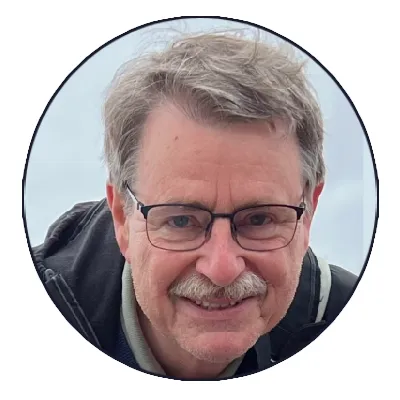
Speaker: Ingemar Grandin
Senior lecturer (emeritus), Linköpings universitet, Sweden
Newah writers, scholars and performing artists such as Chitta Dhar “Hridaya”, Thakurlal Manandhar, Prem Bahadur Kansakar, Kancha Buddha Bajracharya, and Durgalal Shrestha have all not only promoted but also creatively engaged with Newah culture and music in different ways. Prominent in this line of organic intellectuals and music-makers is Ram Krishna Duwal. Born in the watershed year of 2007 V.S., he is young enough to have received state-sponsored education yet also old enough to have grown up when, as Ram Krishna himself put it, “our traditional culture was still very rich” and when instruction and participation in traditional ensembles (dapha, in his case) was still a natural part of growing up.
In his career, education and music has continued to be important. In his young days most of the many villages and towns in the Kathmandu Valley received his visits as he criss-crossed the Valley, performing in teahouses and open spaces and developing the stage presence and expressive voice required to capture a large open-air audience with his singing. He went on to be a teacher in different schools and from there to a position in the Nepal Academy of Music & Drama, all the while entertaining a varied career in consciousness-raising (or progressive) as well as Newah cultural activism.
This contribution presents Ram Krishna’s musical work, principally in the format of songs. The paper draws upon my own archive of notes from and recordings of conversations, observations, interviews, just hanging out, and numerous songs in public and private settings, from the period I was able to follow his work, sometimes regularly, sometimes intermittently, that is from 1985 to 2011.
What interests us here is the ways in which Ram Krishna has made use of the Newah musical heritage: borrowing, collecting, reviving, reinterpreting, restoring, and completing songs, presenting Newah traditional songs in new public settings (such as a progressive/political program), and creating new compositions on the base of this heritage. To this end, he has not only visited various towns and villages in the Valley, but also the bazaars and towns in the Hills and Tarai where Newars have migrated.
While one way of keeping Newah music alive is to, so to say, preserve the traditions (dapha, dhimaybaja, etc) as they are. Ram Krishna (and others with him) have worked in a different way however. It is to contribute to the tradition – to keep it alive by working on with it, contributing from within the tradition and reworking Newah culture in music and other arts for present-day contexts, audiences, musical artists, and concerns.

Leave a Reply
You must be logged in to post a comment.