

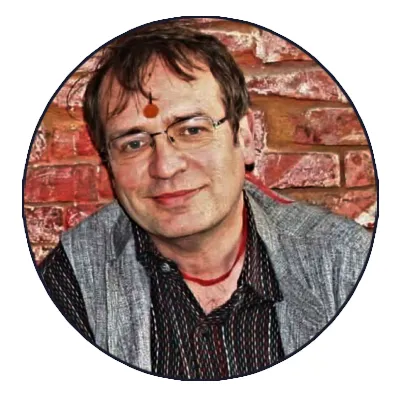
Speaker: Richard Widdess
The tradition of devotional dāphā bhajan singing is found throughout the cities, towns and villages of the Kathmandu Valley. Though severely challenged by recent disasters and ongoing cultural changes, it continues to function as an expression of religious devotion and social identity in many local communities. Viewed locally as a precious inheritance from the community’s forebears, it is also considered to be a centuries-old Newar cultural heritage. How far can the latter view be verified?
Any attempt to answer this question must first decide what are the core characteristics of the tradition, given much variation in repertoire and practice between groups in different areas. A survey of 47 groups in different localities provides some initial data for such a comparison. Common elements that emerge include musical characteristics such as antiphonal performance, instrumentation, concepts of rāg and tāl, and repetition patterns, and the use of writing to preserve song texts.
Historical evidence includes information from the tradition itself, mainly contained in the songbooks, such as the attribution of songs to both Malla and Shāh kings (and occasionally queens). External evidence includes iconographic representation and legal documents, including royal decrees relating to the Dattātreya temple in Bhaktapur and the Tripureśvara temple in Kathmandu. A small number of songs still sung today can be found in literary manuscripts of the Malla period, such as the song Kṛmikita composed by King Jagajjyoti Malla of Bhaktapur. Connections with the tradition of dance-drama patronised by the Malla kings also deserve exploration.
Cumulatively the evidence so far supports the view that dāphā originated in the palaces of the Malla courts in the 17th century CE, was patronised by the Shāh kings, and was disseminated through the larger urban temples to local neighbourhoods and smaller settlements; originally a high-caste tradition, it is now widely maintained by middle- and lower-ranking castes. Although not so immediately appealing as some other Newar performance traditions, such as the masked dances, dāphā bhajan deserves to be more widely understood as a form of living Newar musical heritage.

Leave a Reply
You must be logged in to post a comment.